
Quick Summary
Fabric samples for upholstery let buyers test weight, texture, and durability firsthand, closing the gap between browsing a catalog and committing to an order. Details like edge finishing, labeling accuracy, and consistent color matching shape how buyers perceive quality before they place an order. Tools like fan decks and swatch cards speed up early color decisions, while memo samples give buyers a final, hands-on check before signing off. Manufacturers who keep presentation consistent across every sampling format build the kind of trust that turns first-time buyers into repeat customers.
Furniture buyers don’t typically commit to an upholstered piece based on a photo alone. Texture, durability, and how a fabric wears over time all factor into a purchase decision, and none of those qualities come through clearly on a screen. Fabric samples for upholstery give buyers something they can touch, stretch, and inspect before signing off on an order. They often make the difference between a hesitant inquiry and a closed sale.
Well-presented upholstery fabric samples help buyers evaluate materials more confidently and can shorten the path from initial interest to a final order.
The Role of Fabric Samples for Upholstery in Buyer Decisions
Upholstered furniture takes daily wear in ways that other products don't. A sofa fabric needs to hold up against sitting, pets, spills, and sunlight over years of use. Buyers know this, which is why they often want more than a swatch photo before choosing a fabric for a custom order.
Holding a physical sample lets a buyer check weight, weave tightness, and surface texture. Some fabrics look similar in photos but feel completely different once touched, and that difference matters when someone is picking a material meant to last through years of daily use. A sample also lets a buyer test how a fabric pairs with existing decor, lighting, or other furniture pieces in a room.
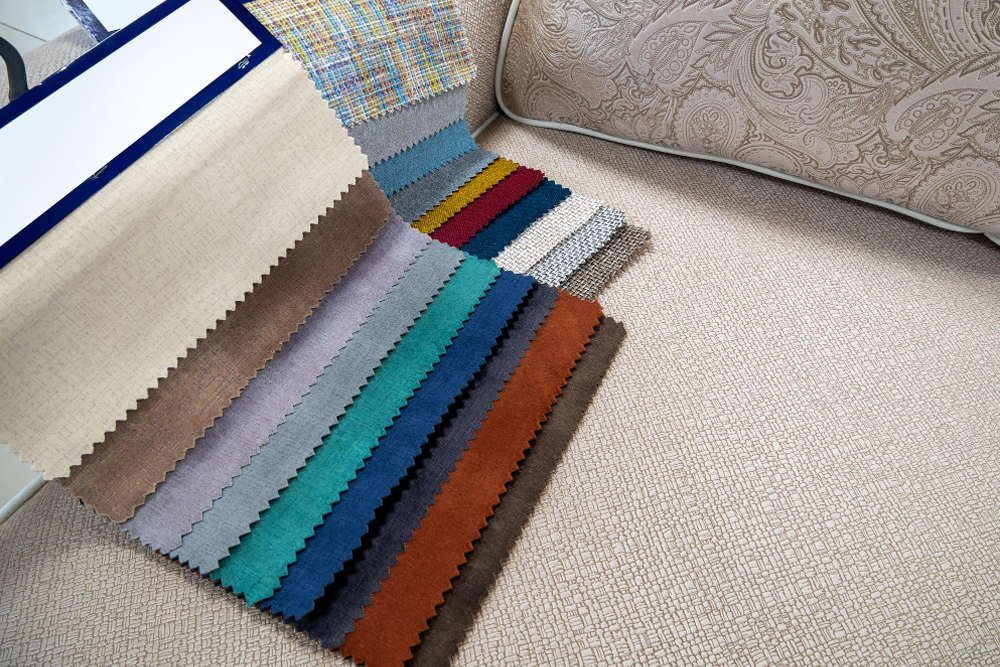
Reviewing options through swatch cards gives manufacturers a compact way to show a wide color range early in the buying process, before a customer narrows down to specific fabrics worth testing further. This step helps filter out options quickly, saving time for both the buyer and the sales team.
What Manufacturers Should Know About Upholstery Sample Quality
Not every sample communicates the same level of quality, and small presentation details can shape how a buyer perceives a fabric before they even touch it.
A few factors worth paying attention to:
Sample size: Larger pieces give buyers a better sense of pattern repeat and texture, especially for prints or woven designs
Edge finishing: Clean, non-fraying edges create a more polished impression and prevent samples from looking worn before they've even been handled
Labeling accuracy: Clear labels with fabric composition, care instructions, and color codes help buyers make informed decisions without needing to ask follow-up questions
Consistent color matching: Samples that match production batches closely reduce the risk of disappointment when a full order arrives
Packaging presentation: How a sample gets delivered, whether loose, in a folder, or as part of a book, shapes a buyer's first impression of the brand
Getting these details right doesn't require a complete overhaul of an existing sampling process. Small adjustments in how samples are cut, labeled, and packaged can shift how a buyer perceives quality before a single order gets placed.
Organizing Upholstery Samples for Faster Buyer Decisions
Furniture manufacturers often carry dozens or even hundreds of fabric options across different collections. Without a clear system, buyers can feel overwhelmed trying to sort through choices, which slows down the sales process.
A sample book collection solves this by grouping fabrics into categories like color family, weave type, or intended use. Buyers can flip through a structured book far faster than sorting loose swatches, and that speed often translates directly into quicker decisions.
Fan decks offer another useful tool for narrowing color choices before moving into deeper fabric evaluation. A fan deck format works well for quick color scanning, letting buyers eliminate shades that don't fit their project before requesting larger cuttings for hands-on testing.
From Swatch to Sample: Supporting the Final Decision
Once a buyer narrows down their options, the next step often involves requesting a larger piece for closer inspection. This is where memo samples come in. A memo sample gives enough material for a buyer to test how a fabric drapes over a cushion, how it responds to stretching across a frame, or how it holds up during a quick durability check.
This step often marks the final stage before a buyer places a full order. Skipping it can leave room for uncertainty, since a small swatch doesn't always reveal how a fabric performs once it's stretched across upholstery foam or sewn into a finished piece.
Harris Sample Book has worked alongside furniture manufacturers for decades, helping build sampling systems that guide buyers smoothly from initial color review through final fabric approval. Our experience across the upholstery industry comes from seeing firsthand how a well-organized sampling process shortens the path between browsing and buying.
Turning Sample Requests Into Closed Orders
A strong sampling process does more than answer buyer questions. It builds trust at every stage of the decision. Buyers who receive well-presented, accurately labeled samples tend to feel more confident in their choice. This helps reduce hesitation and speeds the path to a signed order.
Manufacturers who track which fabrics get requested most often as samples can also spot patterns worth acting on. A fabric that consistently draws sample requests but rarely converts into orders might signal a pricing issue, a fit problem, or a gap in how the fabric gets presented. Paying attention to these patterns can inform decisions about which fabrics to promote more heavily in future collections.
Consistency across every sampling format also affects buyer confidence. If a sample book shows one color tone and a memo sample arrives looking different, that mismatch can create doubt right before a purchase decision. Keeping color calibration and labeling aligned across swatch cards, sample books, and memo samples helps maintain the trust buyers need to move forward.
Turning Buyer Confidence Into Repeat Business
Fabric samples for upholstery do more than answer a buyer's immediate questions. They shape how a buyer perceives quality, reliability, and attention to detail, which influences whether that buyer returns for future projects. A thoughtful, well-organized sampling process pays off not just in closed orders, but in the relationships that keep buyers coming back.
Let's Discuss Your Upholstery Sampling Process
Every furniture line has its own fabric requirements, from durability standards to color matching needs. Get in touch with our team to talk through what might work best for your next collection.
-
Photos can't show weight, weave tightness, or how a fabric feels against skin. Physical samples let buyers assess durability and texture firsthand before committing to a custom order.
-
Clean edge finishing, accurate labeling, and consistent color matching all contribute to a polished presentation. Packaging also plays a role, since how a sample arrives shapes a buyer's first impression.
-
Fan decks let buyers scan multiple color options quickly without requesting full samples for every shade. This narrows the field before moving into closer, hands-on evaluation of specific fabrics.