

Specialty Projects
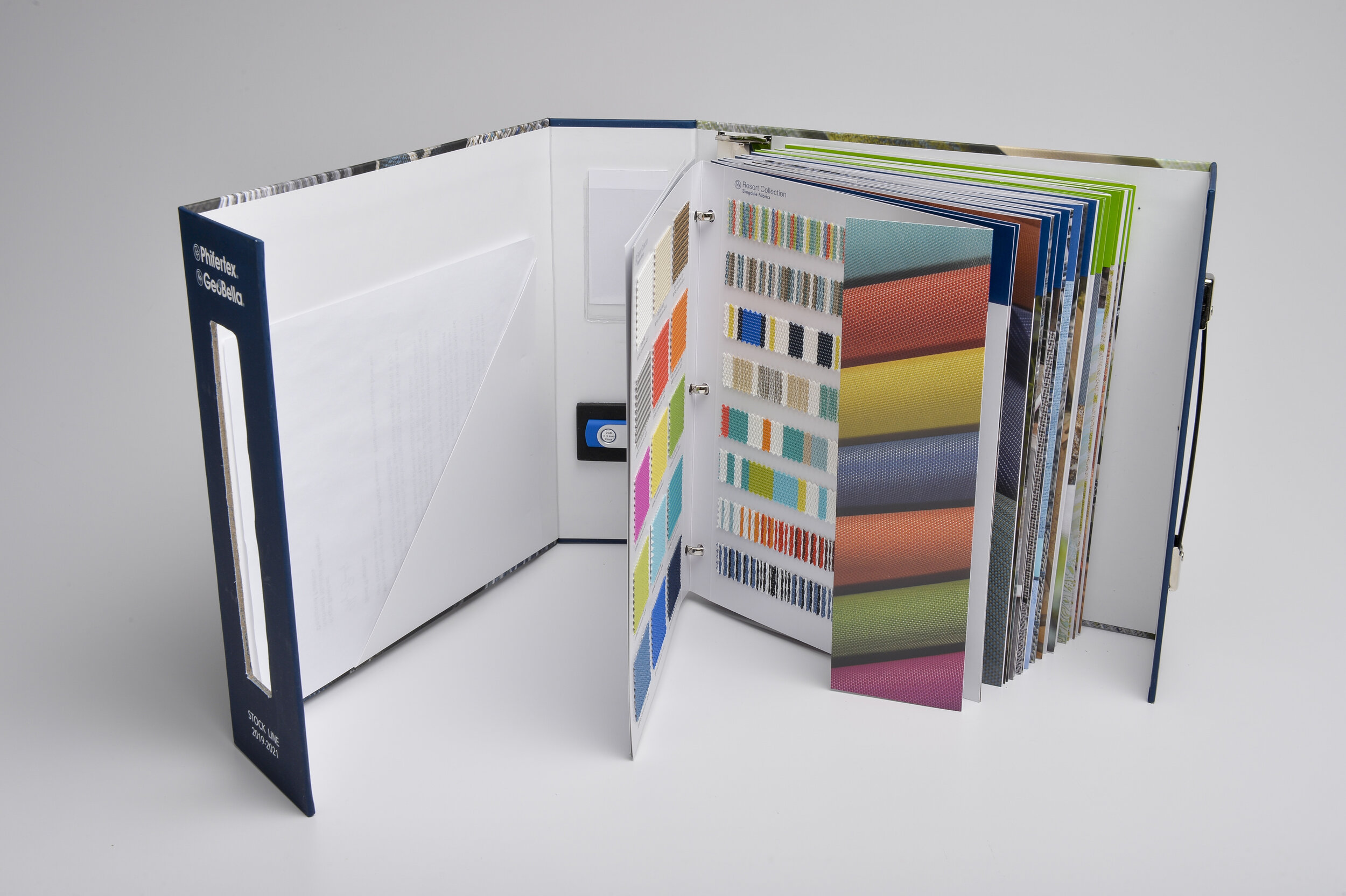
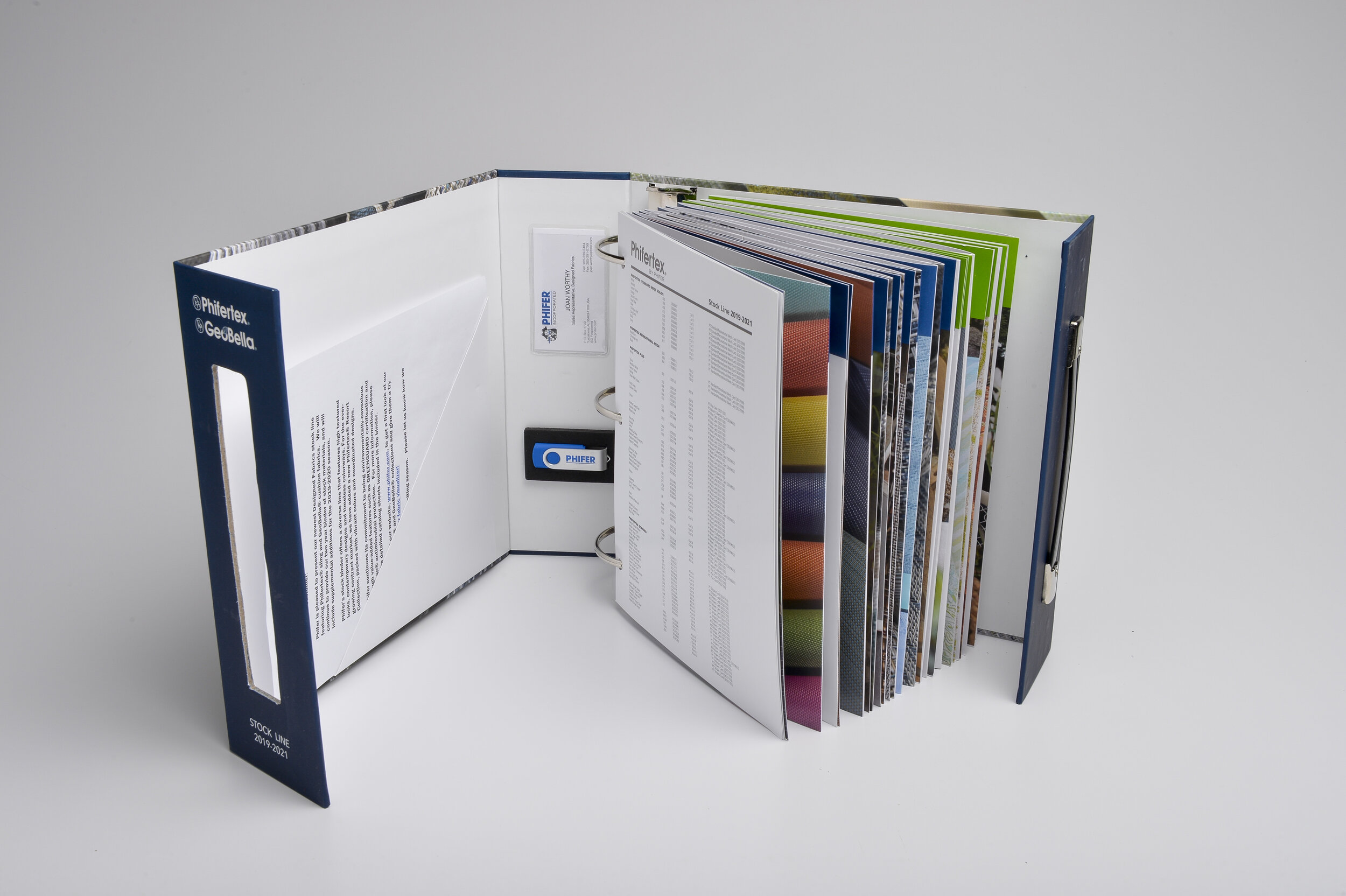
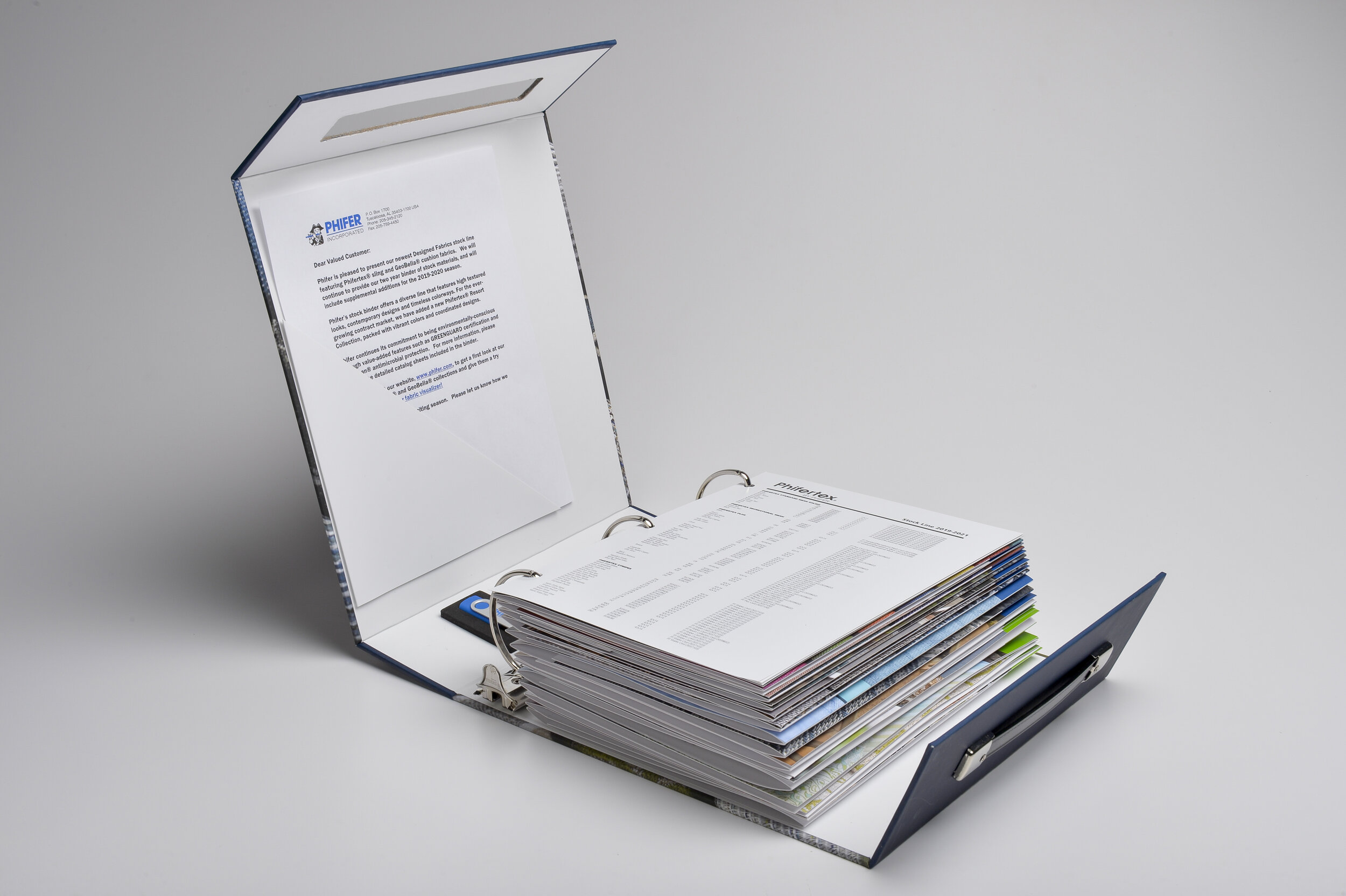
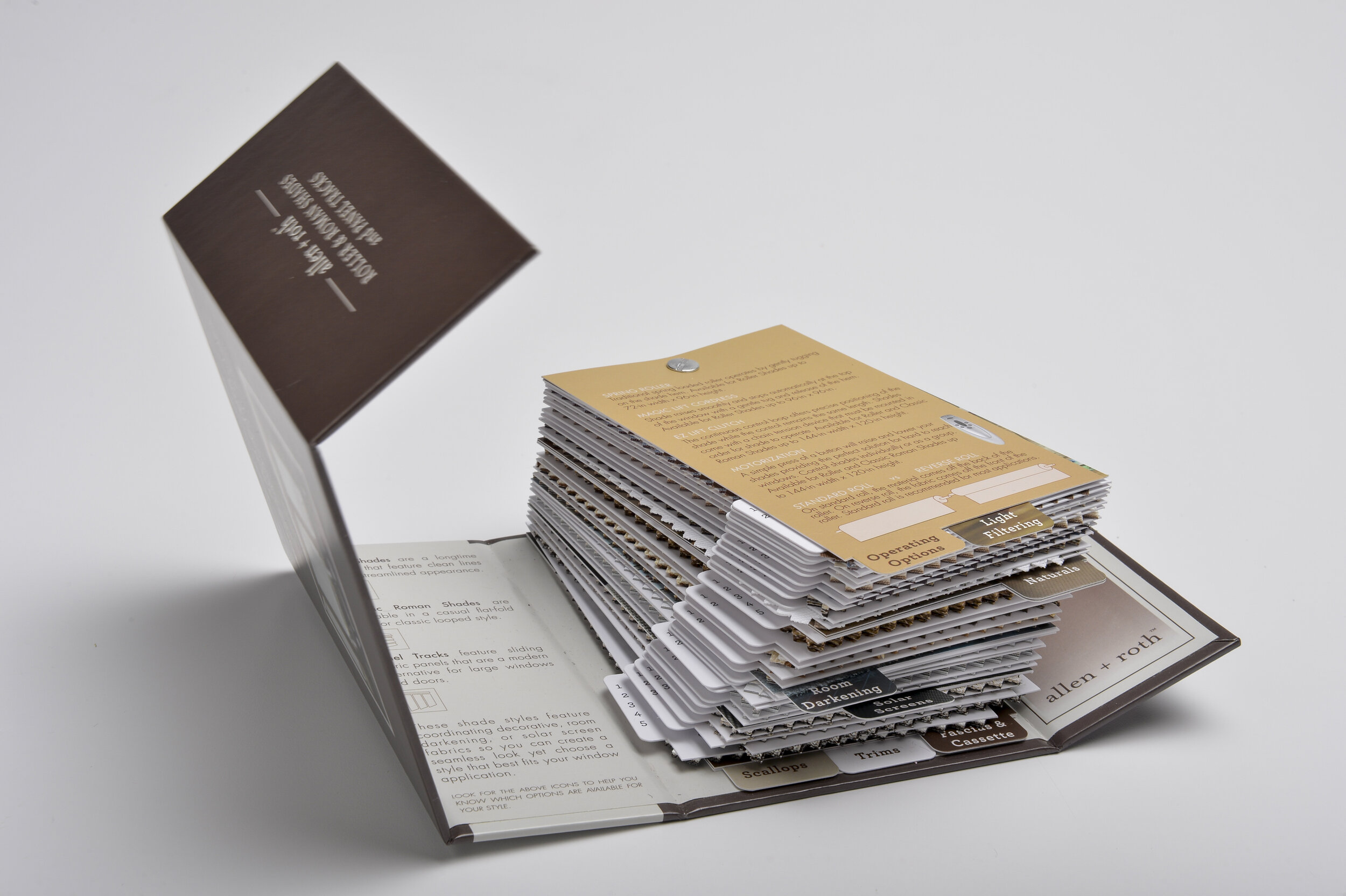
We understand that sometimes the typical products we offer aren’t the perfect fit. When you need something unique, we will work with you to create a one-of-a-kind display that meets your specific needs and reflects your style. We can create highly customizable Presentation Boards, Table Top Displays, and more that you can use in your showroom, at a trade show booth, in client meetings, or as a part of a sales kit.
CUSTOM BINDERS

CUSTOM BOOKS

CUSTOM BOXES
SPECIALTY PROJECT GALLERY
FAQ'S
A: Coming in with a clear sense of how the piece will be used, whether that is showroom display, trade show presentation, or something buyers take with them, helps shape nearly every decision that follows, from material choice to construction method. It also helps to bring examples of fabrics or materials you plan to feature, any existing brand guidelines or color requirements, and a realistic sense of budget and timeline. Even rough sketches or reference images of displays you admire can speed things along considerably. We find that projects move fastest when a client arrives ready to talk through the goal behind the piece, not just its physical specifications, since that context shapes recommendations we would not otherwise think to make.
A: We start by identifying which environment places more demand on the piece, since trade show conditions, transport, repeated setup and breakdown, and constant handling, tend to be tougher than a stationary showroom setting. From there, we build toward that higher standard so the piece performs well in both settings rather than designing for the easier environment and hoping it holds up elsewhere. This often means reinforced construction, more durable hardware, or materials chosen for resilience over pure aesthetics in certain spots. We also think through portability, since a display that looks stunning but is awkward to transport creates real friction for your team. Every specialty project we take on gets evaluated against its full range of intended use.
A: Lead time on a specialty project depends heavily on complexity, since a custom display involving unique materials, hardware, or construction methods naturally takes longer than something built from more standard components. When a deadline is fixed and cannot move, we work backward from that date early in the consultation to identify where the schedule has flexibility and where it does not, sometimes adjusting scope or material choices to protect the timeline without compromising the final result. Rush timelines are occasionally possible but usually involve tradeoffs worth discussing openly upfront. We would rather have that conversation honestly at the start of a project than discover a mismatch between ambition and deadline halfway through production.
A: The key is building modularity into the design from the beginning, using removable panels, interchangeable inserts, or swappable fabric mounts rather than permanently fixed elements throughout the piece. This lets you refresh specific sections as your line evolves while the core structure, and your original investment in it, stays intact. We also think about how updates will physically happen in the field, whether your team can swap elements themselves or whether pieces need to come back to us, since that affects material and hardware choices. At Sample Book, we raise this question early with clients whose lines rotate seasonally, because designing for flexibility after the fact is far more difficult than building it in from the start.
A: Durable, reinforced bases and joints matter enormously here, since a display that gets assembled, disassembled, and transported repeatedly puts real stress on connection points that a one-time-use piece would never experience. Material choices that resist scuffing, fading, and general wear, rather than purely decorative finishes, tend to age much better under regular handling. We also consider how the piece stores between uses, since a display that gets damaged in storage will not survive multiple seasons regardless of how well it was built initially. Investing a bit more upfront in sturdier construction almost always costs less over time than replacing a display that could not withstand ongoing, repeated use.