
Quick Summary
Fabric swatches give apparel designers a hands-on way to test drape, stretch, color, and weight before locking in a full yardage order. Details like colorfastness, hand feel, and stretch recovery reveal how a material will actually perform once cut and sewn, information that spec sheets and digital renderings can't provide. Tools like swatch cards and fan decks speed up early color and texture comparisons, while memo samples allow for deeper testing once a fabric passes initial review. Organizing this process consistently, from swatch to sample, helps design teams catch fit and quality issues before they turn into costly production problems.
Choosing the right material for a clothing line comes down to more than color and price. Fabric swatches let designers test how a material moves, drapes, and holds up before committing to a full yardage order. A swatch in hand answers questions a spec sheet never can, like how a fabric folds under stitching or how it catches light on a moving body.
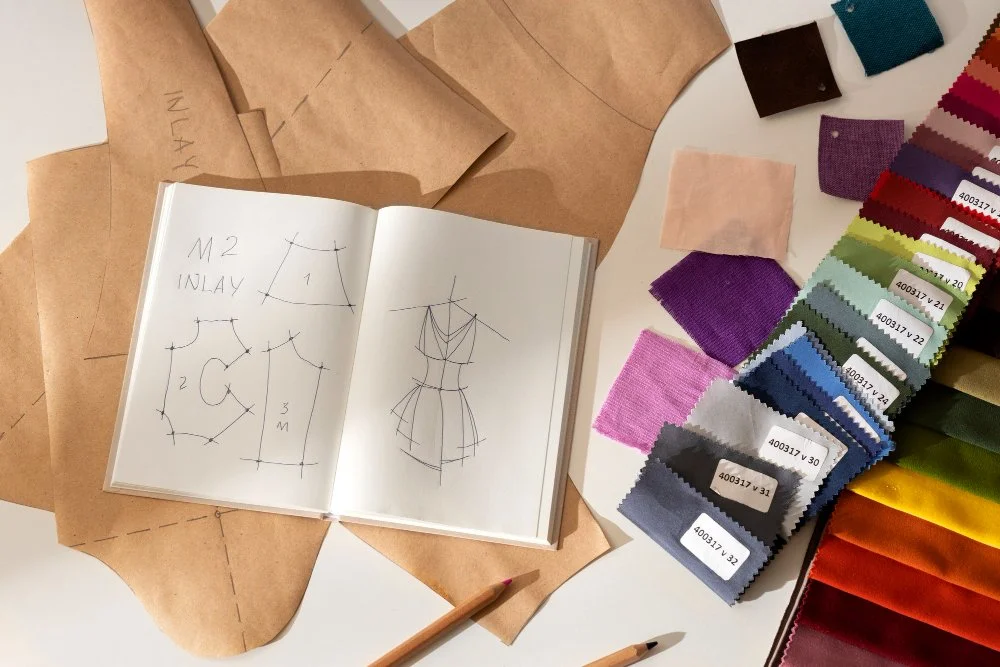
Fabric swatches help apparel designers assess drape, stretch, weight, color, and hand feel before committing to full-yardage orders.
Why Fabric Swatches Matter in Apparel Design
Apparel design decisions carry weight because fabric choice affects fit, comfort, and how a garment ages over time. A swatch lets a designer assess weight, stretch, and hand feel before locking in those decisions. Digital renderings and product photos can show color accurately in good conditions. Yet, they rarely capture how a fabric behaves once it's cut and sewn.
Designers working across seasons often need to compare multiple textiles side by side. Organizing swatches by category, such as knits, wovens, or performance fabrics, makes this comparison easier. Reviewing options through swatch cards gives a compact way to see several colorways or finishes at once without handling full-size samples for every option.
Color accuracy also plays a bigger role than it might seem at first. Showroom lighting differs from runway or retail lighting, so testing a swatch under different conditions can prevent surprises later in production.
Evaluating Fabric Swatches for Clothing Projects
Designers benefit from knowing what to check before moving forward with a material. A few things worth checking closely:
Drape and movement: Hold the swatch up and let it fall naturally to see how it hangs, since this affects how a finished garment will move on the body
Stretch recovery: For knits or blended fabrics, test how well the material returns to its original shape after stretching
Colorfastness: Check whether the color holds up under light exposure or after a quick wash test, especially for lighter shades
Hand feel: Run fingers across the surface to assess softness, texture, and any coating or finish applied
Weight and opacity: Hold the swatch up to light to check for see-through issues, which matters for garments meant to be lined or layered
Checking these details early can save time and cost later, especially when a fabric looks right on paper but behaves differently once cut into pattern pieces.
Comparing Fabric Options Across a Full Line
Apparel lines rarely rely on one fabric type. Designers building a seasonal collection often work across several materials at once, matching different textiles to different garment categories. A structured approach keeps the process organized.
Sample books offer a practical way to manage this variety. A well-organized sample book collection lets a design team flip through options by category or collection, comparing textures and colors without digging through loose fabric bolts. This becomes especially useful when a brand carries dozens of fabric options across multiple product lines.
Some brands also use fan decks to narrow down color families quickly before pulling full swatches. A fan deck format works well for this kind of early-stage color review, letting a team eliminate options fast before requesting larger cuttings for closer evaluation.
From Swatch to Sample: Moving Through the Sourcing Process
Once a swatch passes initial review, the next step often involves requesting a larger cutting for hands-on testing. This is where memo samples come into play. A memo sample request gives a designer enough material to test sewing behavior, seam strength, or how a fabric responds to specific finishing techniques.
This step matters because a small swatch, while useful for color and texture checks, doesn't always reveal how a fabric performs at scale. A larger piece lets you test cuts, stitching, and construction details that a two-inch square simply can't show.
Harris Sample Book has worked with apparel and textile brands for decades, helping design teams move through each stage of fabric evaluation with organized, well-labeled sampling tools. Our industry experience comes from seeing how sampling workflows can speed up a design process or slow it down, depending on how well they're structured.
Building Fabric Evaluation Into Your Design Workflow
A consistent process for reviewing fabric swatches saves time across every collection cycle. Designers who build swatch evaluation into their workflow early tend to catch fit and quality issues before they become expensive production problems.
Keeping a record of past swatch decisions also helps. Noting why a fabric got approved or rejected creates a reference point for future sourcing, especially when working with recurring suppliers or seasonal collections. Over time, this record becomes a useful tool for spotting patterns in what works for a specific brand aesthetic.
Communication with suppliers matters just as much as internal organization. Clear notes on what a design team needs, whether that's a specific weight range, stretch percentage, or finish, help suppliers send more relevant swatches from the start. This reduces back-and-forth requests and speeds up the overall sourcing timeline.
Making Fabric Selection Part of a Bigger Design Strategy
Fabric swatches for clothing serve a specific purpose in the design process: giving designers a physical, reliable way to evaluate materials before committing resources to a full order. Pairing swatches with sample books, fan decks, and memo samples creates a fuller picture of how a fabric will perform once it becomes part of a finished garment.
Building this kind of process into a design workflow doesn't happen overnight, but small improvements in how swatches get reviewed and organized can pay off across every collection.
Let's Talk About Your Fabric Sourcing Needs
Every apparel line has its own fabric requirements, from stretch and weight to finish and drape. Connect with our team to talk through what a better sourcing process could look like for your next collection.
-
Digital renderings show color under specific lighting but can't capture how a fabric drapes, stretches, or feels against skin. Physical swatches reveal texture and movement that screens simply can't replicate.
-
Drape and hand feel are usually the fastest checks, since they reveal a lot about how the fabric will behave once sewn. Stretch recovery and colorfastness matter too, especially for knits or lighter shades.
-
Fan decks let a design team scan multiple color options quickly without requesting full swatches for every shade. This narrows the field before moving into closer, hands-on evaluation.