
The garment industry has a complicated relationship with waste. From overproduction to excess inventory, sustainability conversations tend to focus on the finished product.
What often gets overlooked is everything that happens before a single garment reaches the floor. Swatch cards for fabric play a more meaningful role in it than most people realize.
At Harris Sample Book, we have spent over 50 years helping textile brands, designers, and manufacturers present their fabrics with precision and purpose. We see firsthand how sampling decisions ripple outward. They affect waste, accuracy, and ultimately, the choices brands make about materials. The question of sustainability is one we take seriously.
How Swatch Cards For Fabric Fit Into the Sustainability Conversation
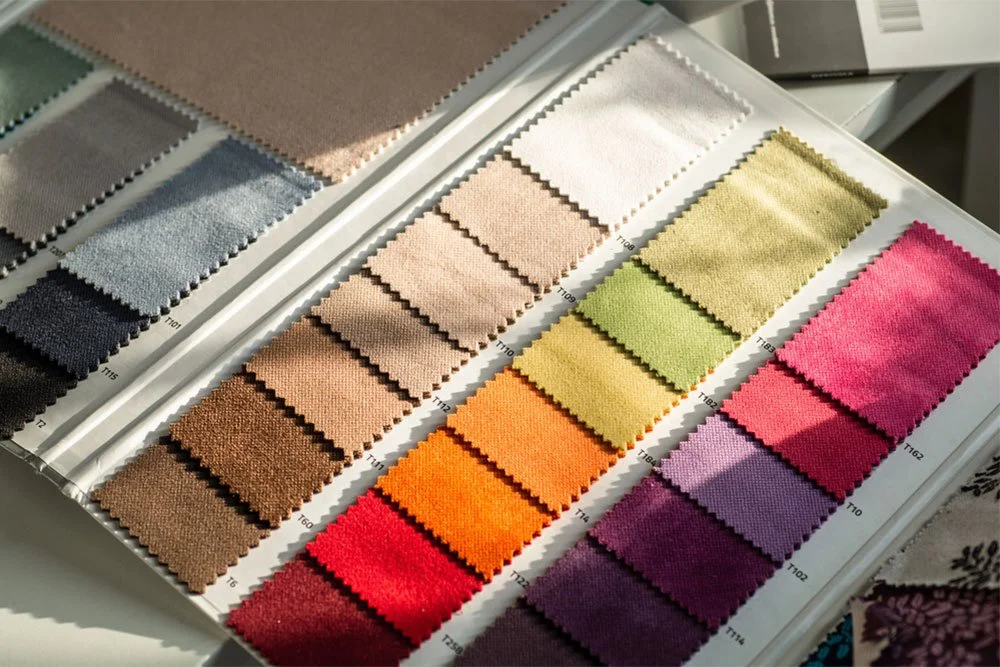
Before a fabric goes into production, it goes through evaluation. Designers need to assess color, texture, weight, drape, and fiber content. Committing to bulk fabric without that evaluation is a costly gamble. Sample books and swatch cards give design teams a physical reference they can hold, compare, and share across departments.
This is where the sustainability case begins to take shape. When a brand can make informed material decisions early in development, it avoids the kind of errors that lead to rejected fabric batches, wasted production runs, and unnecessary reorders. A well-made swatch card carries the same fiber, color, and finish as the fabric in production. Decisions based on accurate references tend to be better.
Swatch cards also serve as a communication tool across the supply chain. Mills, design studios, buyers, and production teams all reference the same physical sample. Misunderstandings about color or texture at this stage are far more costly to correct once fabric has been cut and production has started. Getting it right early means generating less waste downstream.
The Hidden Waste Problem in Sampling Itself
Sustainability in sampling is not a one-sided story. The fashion industry requests enormous volumes of fabric samples every season. Many of those samples travel internationally, get reviewed once, and are discarded when the collection cycle ends. Swatch books that combine paper, glue, synthetic fabrics, and protective coatings are notoriously difficult to recycle.
This is a real tension in the industry. Sampling is necessary, but poorly managed sampling creates its own environmental burden. The textile sector already contributes an estimated 8 to 10 percent of global carbon emissions and around 20 percent of industrial wastewater. Adding avoidable sampling waste on top of that is a problem worth addressing.
The answer is not to abandon physical sampling. Texture, weight, and drape cannot be accurately communicated through a screen. Digital fabric tools have their place, and we see more brands integrating them into their workflows, but physical samples remain essential to accurate material evaluation. The goal is smarter sampling, not less of it.
Swatch Libraries, Reuse, and the Circular Approach
One of the most practical shifts happening in sustainable sampling is the move toward long-term swatch libraries. Design studios that keep fabric references for several seasons reduce the need to request new samples. When the same swatch gets used across three or four collections, its environmental impact spreads over a longer period. A sampling tool that lasts is inherently more sustainable than one that needs to be replaced after a single season.
Reuse at the studio level also aligns with a broader principle of circular design: maximizing the useful life of every material resource. When swatch cards serve as long-term reference tools, they align much more naturally with where the industry is headed.
Material Transparency and Smarter Sourcing
There is another dimension to this worth considering. A well-produced swatch card carries more than just a fabric sample. It carries information. Fiber composition, weight, dye method, weave structure, and finishing processes. All of this detail informs sourcing decisions, and those decisions directly impact a brand's environmental footprint.
Designers who have access to accurate, detailed fabric references are better positioned to choose materials with lower environmental impact. Recycled fibers, organic cotton, and low-impact dyes; these options only make it into a collection when the decision-making process has reliable information to work from. When used well, a swatch card is a tool for more responsible sourcing.
We work with clients across the textile industry who use our sampling tools as part of a deliberate sourcing strategy. The quality of the swatch matters because the information it carries does. An inaccurate or poorly made swatch leads to poor decisions, and poor decisions cost more than money.
Making Sampling Work For the Long Term
Sustainable sampling comes down to intention. Requesting only what is needed, maintaining organized swatch libraries, choosing durable formats, and integrating physical samples with digital tools where possible. These are practices that reduce waste without compromising the accuracy that material development requires.
At Harris Sample Book, our focus has always been on helping brands present their fabrics accurately and efficiently. We bring decades of expertise to every project, and we understand that sampling tools are not just marketing materials. They are functional assets that influence decisions at multiple points in the production process.
The brands getting this right are those that treat their sampling programs with care.
Start Sampling With More Purpose
Sustainability in the garment industry starts well before production. The tools used to evaluate and present fabric carry more weight than most brands account for. At Harris Sample Book, we have watched this play out across decades of working with textile companies of all sizes. Brands that treat sampling programs as a core part of their process often make better sourcing decisions and waste less material. They also communicate more effectively across their supply chains.
The conversation around sustainability in fashion is only going to grow. Getting your sampling program in order now means you are ahead of the curve. Physical samples remain irreplaceable in material evaluation. The quality of those samples directly influences the quality of the decisions made from them.
Ready to approach your sampling program with more intention? Our team is here to help you get there. Connect with us today, and let's build something that works for your brand and lasts.