
Quick Summary
Designing fabric memo samples well comes down to a handful of decisions that add up fast. Size should match the fabric type and end-use setting. Edge finishes protect the material and shape how professional it feels in the hand. Labels carry brand identity and the product details buyers need to act. The binding format determines how the set travels, displays, and gets used in the field.
A client can read a product description, scroll through photos, and still walk away unsure. Hand them a physical sample, and the decision gets a lot easier. At Harris Sample Book, we have seen this play out for over 50 years. It is why custom fabric memos remain one of the most practical tools in the textile industry.
A memo sample is a stand-alone piece of fabric, cut and finished, that gives buyers a real feel for the material before committing to a purchase. Done well, it communicates texture, weight, drape, and color in a way no digital image can. The question most fabric brands face is not whether to use them, but how to design them so they do their job properly.
This guide walks through the key decisions involved in creating fabric memos that look professional, withstand repeated handling, and represent your collection.
What Custom Fabric Memos Are Used For
Before getting into design decisions, it helps to understand where memo samples sit in the sales and design process. Memo samples are typically used at the final stage of fabric selection. A buyer has narrowed down their options, and the memo gives them something physical to live with before making a call. They take it home, hold it up to a finished space, compare it against other materials, and come back with a decision. In that context, the memo is doing a lot of work on your brand's behalf.
They are also used when launching new collections, adding SKUs to an existing range, or putting together kits for sales reps heading into the field. A memo that travels well, stays clean, and presents the fabric accurately is worth investing time in.
Single memos work well for fabrics with bold or large-scale patterns, where you need enough surface area to show the repeat properly. Memo sets, bound with rings, chains, or eyelets, are a great way to present a coordinating collection in a single compact package.
Choosing the Size for Your Fabric Memos
Size is one of the first decisions you will make, and it depends on what the memo needs to accomplish.
The most common dimensions in the industry are 8½" x 8½", 13" x 13", and 17" x 17". Smaller formats work well for trade reps and client meetings because they are portable and easy to carry. Larger formats give a truer read on pattern scale and tend to work better in showrooms, at trade events, or during new product launches, where you have space to display them properly.
The fabric type matters here, too. A solid-colored performance textile reads clearly at a smaller size. A fabric with an intricate jacquard weave or a large floral repeat needs more surface area to make an impression. When in doubt, go slightly larger. A sample that shows too little of the pattern leaves buyers guessing.
Size can also be customized beyond the standard options. If your collection has a specific application or end-use, the memo dimensions can be adjusted to fit that context.
Edge Finishes: The Detail That Changes Everything
The edge finish on a memo sample is easy to overlook, but it is one of the first things a buyer notices when they pick one up. A fraying edge on an otherwise beautiful fabric sends the wrong message.
There are three main finishing methods to choose from:
Straight cut: Clean and simple. Works well for synthetic and manmade fabrics that do not fray. Some clients also prefer this look on structured linens and cottons.
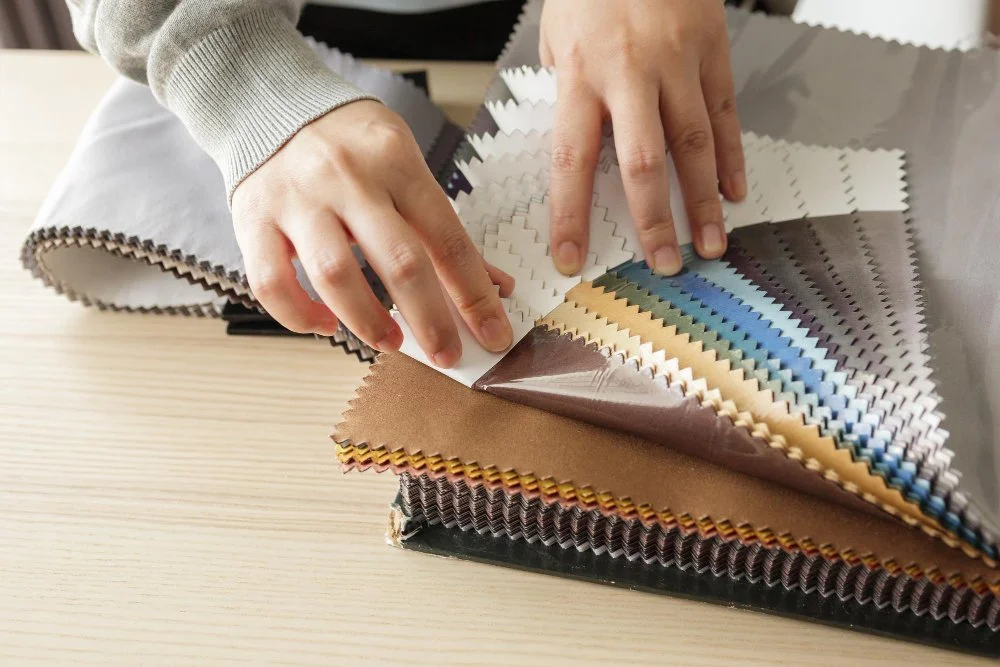
Pinked edge: The classic zig-zag cut. It works across a wide range of fabric types and naturally reduces fraying without any additional finishing. This is the most common choice in the industry.
Serged edge: An overlocked edge that gives the memo a more finished, sewn look. A good option when durability matters, especially for samples that will be handled frequently.
Beyond these three, memos can also be paper-framed for a more polished, presentation-ready appearance. Some clients opt for a turned hem, which gives the sample a softer, more refined edge. The right choice depends on the fabric weight, the end audience, and the overall look you want the sample to project.
If you are putting together a set for sample books or a branded sales kit, consistency across all edge finishes is a must. Mixed finishes within a set can make even high-quality fabrics feel like an afterthought.
Labeling Your Memo Samples
A memo sample without a label is a missed opportunity. The label is where your brand shows up, and where buyers get the information they need to follow up or place an order.
At a minimum, a fabric memo label should include:
Fabric or pattern name
Fiber content and fabric composition
Care instructions
Collection name or SKU reference
Your brand name and logo
Contact details or website
Labels can be printed on an attached card and positioned under the fabric, on the back, or both. Headers (which attach at the top of the sample) are another popular option, particularly for memo sets. Headers help keep samples organized and give the set a catalog-ready feel.
Some brands are also adding QR codes to their labels, linking directly to a product page or collection lookbook. It is a practical addition for reps and designers who want quick access to more information on the spot.
The label design should align with your broader brand identity. Fonts, colors, and logo placement all contribute to how professional the finished memo looks in a buyer's hands.
Presentation Format and Binding Options
Once you have sorted size, edge finish, and labeling, the last major decision is how the memos will be presented.
Single memos can be displayed individually, hung from a display hook, or sent loose in a sales kit. Memo sets can be bound in a few different ways, depending on how the samples will be used and how often they need updating:
Ring sets allow individual memos to be swapped out easily, which is useful when a collection evolves or when certain SKUs are discontinued.
Chain sets offer a similar level of flexibility and are common in showroom settings.
The booklet format gives the set a more formal, curated presentation, closer to a mini-catalog.
Hanging memos are practical for display in showrooms or retail environments where wall or rack space is available.
The binding format affects how buyers interact with the samples, so it is worth thinking about the end-use scenario before deciding. A set that lives in a showroom needs to look good from a distance. A set going out with field reps needs to be durable and easy to carry.
Get Your Fabric Sampling Right From the Start
Designing a memo sample is not complicated, but the decisions add up. Size, edge finish, label content, and presentation format all work together to shape how a buyer experiences your fabric. Getting those details right from the beginning saves time and makes a stronger impression.
We have been helping fabric brands and textile companies work through these decisions since 1968. If you are ready to put together memo samples that represent your collection the way it deserves, get in touch with our team today.
FAQs
-
Single memos work best when the fabric has a large or complex pattern that needs space to read properly. Memo sets make more sense when presenting a coordinating collection, giving buyers a side-by-side view of how the fabrics work together.
-
There is no fixed number. Most memo sets are sized around a specific collection or colorway grouping. A tightly edited set of six to twelve samples tends to present more clearly than an oversized set that overwhelms the buyer.
-
A pinked edge uses a zig-zag cut to reduce fraying and works across most fabric types. A serged edge is overlocked and sewn, giving the memo a more finished look. Serging is generally the better option when samples will be handled frequently over time.